The Great Wall of China: How It Was Really Built
Walk with us along the Great Wall of China. Every step here is a step through more than two thousand years of history, and every stone has a story. This wall stretches across mountains for thousands of miles, built stone by stone to guard an empire against invasion, and it still draws visitors from all over the world today.
A wall built over centuries, not in a single lifetime
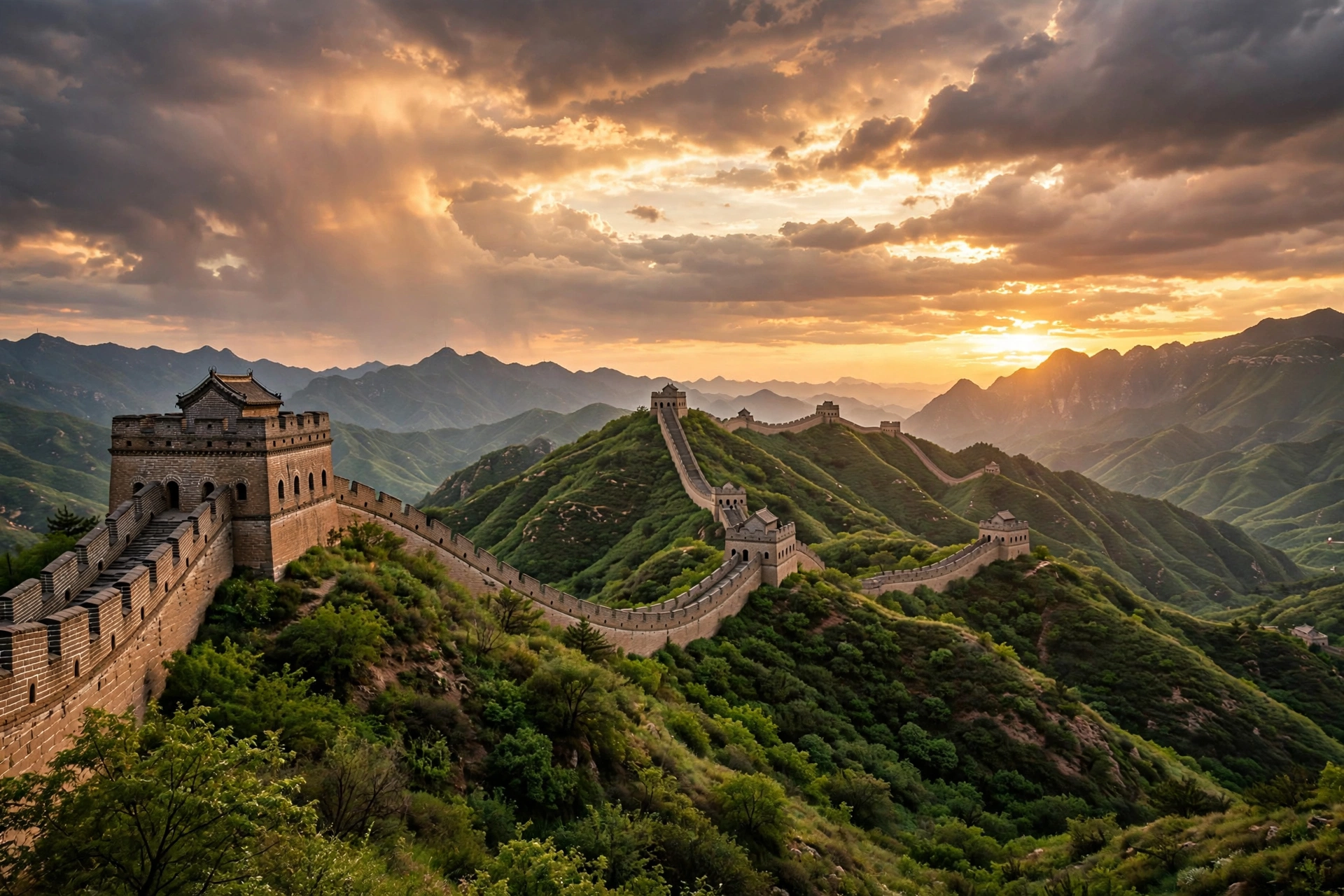
The Great Wall was not built in one project or by one emperor. Early walls were built by separate Chinese states to protect their borders, and later dynasties joined, rebuilt, and extended them into one long defensive system. The most famous stone sections, with watchtowers and brick faces, mostly come from the Ming dynasty, when building reached a new scale and quality. That long history is why the wall looks different in different places: some parts are strong stone, others are earth, wood, or simple mountain ridges used as natural barriers.
How workers carried stone up the mountains
Thousands of workers, soldiers, and farmers carried stone up steep mountain paths, one block at a time, often in terrible heat and cold. They made bricks in kilns, mixed sticky rice mortar, and laid each brick by hand so the wall would hold for centuries. Roads, ramps, and simple machines helped move heavy loads, but most of the work was human effort, repeated day after day, year after year, across remote and dangerous terrain.
Clever engineering: ridges, towers, and beacon fires
From above, the design is easy to admire. The wall follows the ridges, rises and falls with the land, and uses high ground for the best view. Every watchtower could see the next one, so guards could watch the northern frontier day and night. When danger came, soldiers lit beacon fires, and the smoke signal passed from tower to tower in minutes, warning forts and towns far behind the wall. It was a communication system as much as a barrier.
Life below the wall: villages, farms, and winter guards
Below the wall, villages grew up around it. People farmed, traded, and lived in its shadow, protected by the same stones their grandfathers had carried. Rivers fed the workers and the villages that built and guarded the wall for generations. Even in winter, when snow covered the mountains, guards stayed at their posts, because the wall never slept. The wall shaped daily life, not just warfare.
Restoration and why it still matters today
Today, the Great Wall is protected as a UNESCO World Heritage site, and restoration teams carefully repair damaged parts, stone by stone, just like the original builders did. At sunrise, mist fills the valleys, and the wall looks almost endless, a line of history running across the mountains. It is not just a wall. It is a story of hard work, engineering, and a civilization that wanted to protect its home, and a reminder of what people can build when they work together for generations.
Watch the full story
If you want to see the wall, its workers, its towers, and its mountain landscapes in motion, watch our full 3-minute documentary on YouTube: The Great Wall of China: How It Was Really Built. The video is on the vimhugo channel, and the full story, with more history and amazing facts, is right here on vimzify.com.
Put it into practice — free, right in your browser:
Explore Vimzify Tools →