How the Roman Colosseum Was Really Built
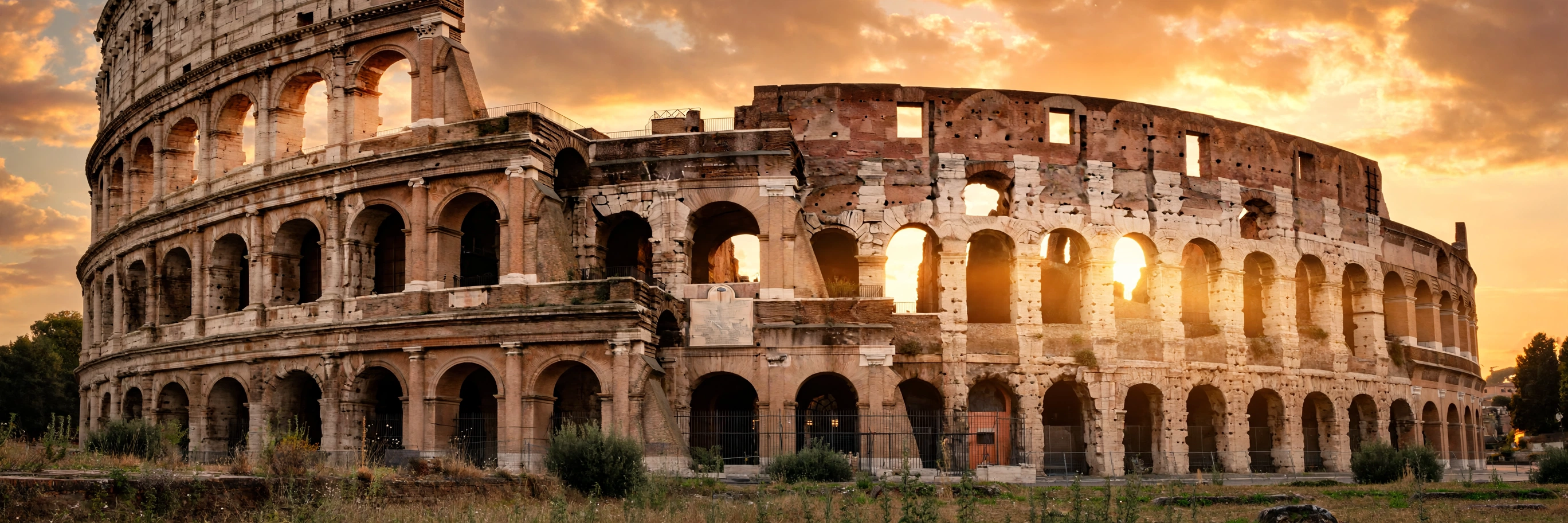
The Colosseum is an engineering wonder that still towers over Rome nearly two thousand years after it opened. Its concrete, arches, lifts and awning show how Roman builders turned stone and clever planning into a stadium for tens of thousands of people.
The drained lake and foundations
The Colosseum stands where Nero had built a private lake. Builders drained the lake, dug deep foundations and laid a thick concrete raft so the huge stone ring would not sink into the soft ground. That firm base still carries the weight of the arena today.
Travertine stone and cranes
Builders used travertine stone from quarries about twenty miles away. Large blocks were hauled to Rome, lifted by cranes powered by workers walking inside treadwheels, and fixed in place with iron clamps. Each block was cut to fit, so the outer wall rose quickly and evenly.
The genius of arches
Arches are the secret of the Colosseum. Each arch turns weight downward into strong piers, so long rows of arches could support seating for about fifty thousand people. The same arches created open walkways, stairs and entrances that let crowds enter and leave in an orderly way.
The hypogeum machine below
Below the arena floor was the hypogeum, a network of tunnels, rooms and lifts. Cages, scenery and performers were raised through trapdoors by ropes, pulleys and counterweights. It was a working machine, hidden from the crowd, that made spectacles appear from below the sand.
The velarium awning
Above the crowd stretched the velarium, a huge cloth awning. Sailors from the Roman fleet worked ropes and masts to spread it over the seating and give shade from sun and rain. It shows that Roman engineers planned comfort as well as strength.
Why it still stands and what science learns today
Earthquakes, stone reuse and time have damaged the Colosseum, yet much of it still stands. Modern science studies its concrete, which can grow stronger as minerals form inside cracks, and its arches, which still teach engineers how to build large structures that last.
Put it into practice — free, right in your browser:
Explore Vimzify Tools →